
Urgent Call?
+91-7453000063
Email Us
sales@acpvalves.in
+91-7453000063
sales@acpvalves.in
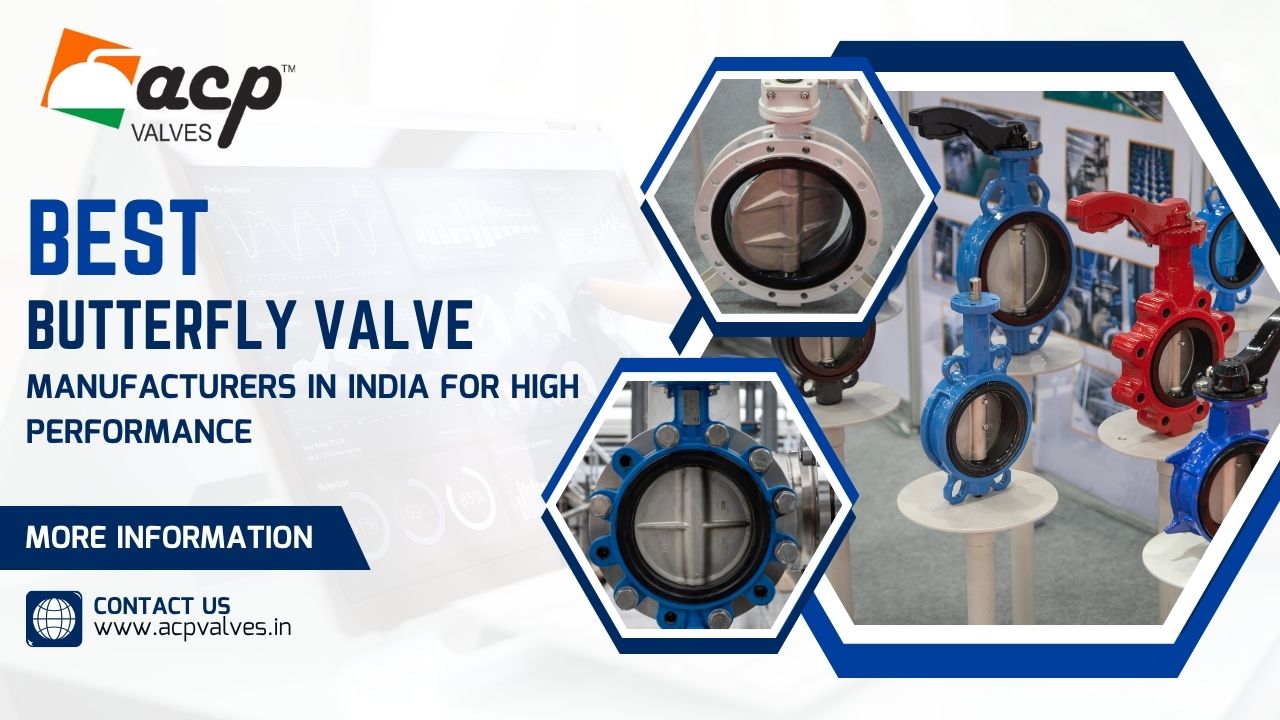
Butterfly valves are widely used in water networks, HVAC systems, utilities, process plants and industrial pipelines because they provide compact shut-off and flow-control solutions across a broad range of sizes.
India has many manufacturers and valve brands serving this market, but comparing them should involve more than brand recognition or quotation price. Valve design, size range, pressure rating, materials, seat or liner, actuation, testing and suitability for the actual service conditions all matter.
This guide compares 10 butterfly valve manufacturers in India that industrial buyers can consider in 2026. The order is not intended as an objective ranking from best to worst. Each company has a different product focus, and the right choice depends on the project specification.
Quick answer: Before shortlisting a butterfly valve manufacturer, define the media, valve size, pressure, temperature, body style, body and disc materials, seat or liner, flange requirements and operating method. Comparing manufacturers against one complete specification is much more useful than comparing names alone.
For a broader comparison of companies across different valve categories, you can also explore our Top 10 Valve Manufacturers in India guide.
The following companies provide a practical starting point for industrial buyers. Product ranges and specifications can change, so final selection should always be checked against the manufacturer’s current technical documentation and the project’s actual service conditions.
| Company | Butterfly Valve Focus | Useful Buyer Check |
|---|---|---|
| ACP Valves | Wafer-type industrial butterfly valves | Pressure rating, lining, materials and operating method |
| L&T Valves | Triple-offset, elastomer-lined and fabricated-steel designs | Project standards, pressure class and service conditions |
| Kirloskar Brothers Limited | Large-size and water-service butterfly valves | Pipeline size, pressure and utility requirements |
| KSB | Centred-disc butterfly valves across several constructions | Body style, liner, actuation and application |
| Flowserve | High-performance and lined butterfly-valve solutions | Process severity, materials and shut-off requirements |
| AVK Valves India | Butterfly valves for water and infrastructure systems | Water-service specification, coating and size |
| Amtech Valves | Rubber-lined, PTFE-lined and high-performance options | Seat, liner, actuation and media compatibility |
| Oswal Industries | Triple-offset metal-seated butterfly valves | Pressure, temperature and critical-service requirements |
| Hawa Valves | Engineered offset butterfly valves | Hydrocarbon, energy and process specifications |
| Leader Valves | Wafer butterfly valves for plumbing, HVAC and industrial use | Material, pressure, disc and application requirements |
ACP Valves manufactures butterfly valves for industrial pipeline and flow-control applications. Its published range includes wafer-type, lever-operated designs with cast iron, ductile iron and stainless-steel construction options, along with different elastomer lining choices.
For buyers evaluating ACP, the important step is to provide the actual service conditions. Media, valve size, operating pressure, temperature, material requirements, lining and preferred operating method should be stated clearly before the final valve configuration is selected.
L&T Valves has an established industrial flow-control portfolio and currently publishes several butterfly-valve technologies, including triple-offset, elastomer-lined and fabricated-steel designs.
This range makes the company relevant to process, utility and engineered projects where the butterfly valve has to be selected against specific pressure, temperature, material, seating and project-documentation requirements.
Kirloskar Brothers Limited has a long association with pumps, valves and large fluid-handling systems. Its butterfly-valve capability is particularly relevant to water, utility and large-pipeline applications.
For large-diameter requirements, buyers should compare valve size, pressure designation, body construction, operating mechanism, installation requirements and the manufacturer’s current project documentation.
KSB offers several centred-disc butterfly-valve ranges for water, HVAC, irrigation, building services and industrial applications. Depending on the product family, its portfolio includes wafer, lug and flanged constructions as well as different liner and actuation options.
Buyers comparing KSB with other manufacturers should match the specific product family to the required pressure, temperature, media, pipe connection and operation method rather than treating every butterfly valve as equivalent.
Flowserve offers industrial butterfly-valve solutions for process and demanding flow-control applications. Its published portfolio includes high-performance and lined butterfly valves for different service conditions.
For process-industry procurement, the main comparison points should include body and disc materials, seat or liner construction, pressure and temperature conditions, shut-off requirements and compatibility with the process media.
AVK Valves India supplies butterfly-valve solutions associated strongly with water, wastewater, utility and infrastructure applications.
For these projects, buyers should compare valve size, pressure class, coating, sealing arrangement, actuator or gearbox requirements and compatibility with the applicable water-system specification.
Amtech Valves manufactures butterfly valves across several constructions and publishes rubber-lined, PTFE-lined, metal-sealing and high-performance options. Different manual and actuator-operated configurations are also available across its range.
This gives buyers several choices, but the proposed valve should still be checked against the actual media, temperature, pressure, body style, lining and actuation requirement before selection.
Oswal Industries manufactures engineered butterfly valves, including triple-offset metal-seated designs for more demanding process applications.
Triple-offset construction is commonly considered where pressure, temperature, shut-off performance or service severity goes beyond what is typically expected from a basic resilient-seated valve. Buyers should compare the exact design standard, materials, seat construction and testing requirements for the project.
Hawa Valves manufactures butterfly valves for hydrocarbon, energy and process-industry applications. Its range includes engineered offset butterfly-valve designs for projects where pressure, metallurgy, seating and service conditions require detailed technical evaluation.
For these applications, procurement teams should review the manufacturer’s current design, materials, testing and project-documentation capabilities against the specification rather than making a decision on brand name alone.
Leader Valves manufactures butterfly valves for plumbing, HVAC, fire-fighting and industrial flow-control applications. Its published range includes several cast-iron and ductile-iron wafer-type configurations with different disc materials and pressure ratings.
Buyers should compare the selected valve’s body material, disc, seat, pressure designation, pipe connection and intended service before final procurement.
A manufacturer list is useful for creating a shortlist, but the final decision should be based on technical compliance. Two valves of the same nominal size can differ considerably in construction, materials, sealing, pressure capability and operating arrangement.
| Selection Factor | What to Check | Why It Matters |
|---|---|---|
| Process media | Water, air, gas, chemicals or other fluid | Determines material and liner compatibility |
| Valve size | Required DN or NPS | Not every manufacturer offers every design in every size |
| Pressure | Operating and design pressure | The selected valve must suit the system conditions |
| Temperature | Normal and maximum operating temperature | Affects seat, liner and material suitability |
| Body style | Wafer, lug, flanged or project-specific construction | Must match installation and piping requirements |
| Materials | Body, disc, shaft and other wetted components | Important for corrosion and service life |
| Seat or liner | Elastomer, PTFE, metal or other specified material | Critical to sealing and media compatibility |
| Operation | Lever, gearbox, pneumatic or electric actuator | Determines operating method and automation requirement |
| Testing | Pressure, leakage, inspection and documentation | Helps demonstrate compliance with the project requirement |
Searches for a butterfly valve supplier and a manufacturer often overlap, but they are not always the same type of business.
A manufacturer produces or engineers the valve, while a supplier may stock and distribute products made by one or more manufacturers. For many routine requirements, either model can work. For project procurement, however, buyers should know the actual make of the valve, where the product originates, what technical documentation is available and who is responsible for application support.
When comparing butterfly valve suppliers in India, ask for the manufacturer’s name, model or series, technical datasheet, material details, applicable testing and any required certification before comparing quotations.
A familiar brand can make initial shortlisting easier, but brand recognition alone does not establish technical suitability. The same manufacturer may offer several butterfly-valve series designed for very different services.
When reviewing a butterfly valve make list, compare the exact model rather than only the company name. Check whether the particular design matches the required pressure, temperature, materials, liner, flange arrangement and actuation.
This is especially important because a water-service resilient-seated valve and an engineered triple-offset valve can both be described as butterfly valves while serving very different operating conditions.
Butterfly-valve manufacturers may publish wafer, lug, flanged, resilient-seated, double-offset, triple-offset and other configurations. These terms are useful when comparing product ranges, but this manufacturer guide is not intended to replace a detailed technical selection process.
For example, wafer designs are commonly selected for compact installation, while lug or flanged constructions may be preferred for particular piping arrangements. Offset designs are often considered for more demanding service conditions. The correct choice depends on the actual system specification.
If you are comparing butterfly valves with another isolation-valve technology, see our Butterfly Valve vs Ball Valve comparison.
A complete enquiry helps manufacturers and suppliers quote products on the same technical basis. Instead of sending only valve size and quantity, include the main process and piping requirements.
Procurement tip: compare commercial offers only after confirming that the proposed valves meet the same technical specification. A lower quotation is not necessarily better value if the construction, materials or testing are different.
There is no single butterfly valve manufacturer that is automatically the best choice for every project. A municipal water pipeline, HVAC installation and high-temperature process line can require very different valve technologies.
A practical shortlist should consider:
Industrial buyers in India commonly compare companies such as ACP Valves, L&T Valves, Kirloskar Brothers Limited, KSB, Flowserve, AVK Valves India, Amtech Valves, Oswal Industries, Hawa Valves and Leader Valves. The right choice depends on the required valve design, size, pressure, temperature, materials and application.
Define the process media, size, pressure, temperature, body style, materials, seat or liner and operating method first. Then compare manufacturers according to technical compliance, testing, documentation, delivery and application support.
There is no single butterfly valve brand that is best for every application. The correct make and model should match the required service conditions, materials, pressure rating, sealing arrangement and installation requirements.
A manufacturer produces or engineers the valve, while a supplier may distribute products from one or several manufacturers. Buyers should confirm the actual valve make, technical documentation and source of manufacture when traceability matters.
Include the media, size, operating and design pressure, temperature, body style, body and disc material, seat or liner, connection standard, operating method, quantity and any testing or certification requirements.
No. They use different body and mounting arrangements. The appropriate construction depends on the pipeline configuration, maintenance requirements and the manufacturer’s permitted service conditions for the exact model.
The best way to compare butterfly valve manufacturers in India is to start with the application rather than the company name. Define the media, pressure, temperature, valve size, construction, materials, seat or liner and operating method, then compare manufacturers against the same technical specification.
The 10 companies in this guide provide a useful starting point for industrial buyers in 2026, but the list order should not determine the final decision. Technical suitability, documentation, testing, delivery and support matter more than simply choosing the first name on a list.
For an ACP-specific requirement, review the ACP butterfly valve range or contact ACP Valves with your operating conditions and project specification.
Copyright © 2022. All rights reserved.ACP VALVES
Crafted With ❤️ By Digicircal – Web Designing, Digital Marketing & Branding Company