
Urgent Call?
+91-7453000063
Email Us
sales@acpvalves.in
+91-7453000063
sales@acpvalves.in
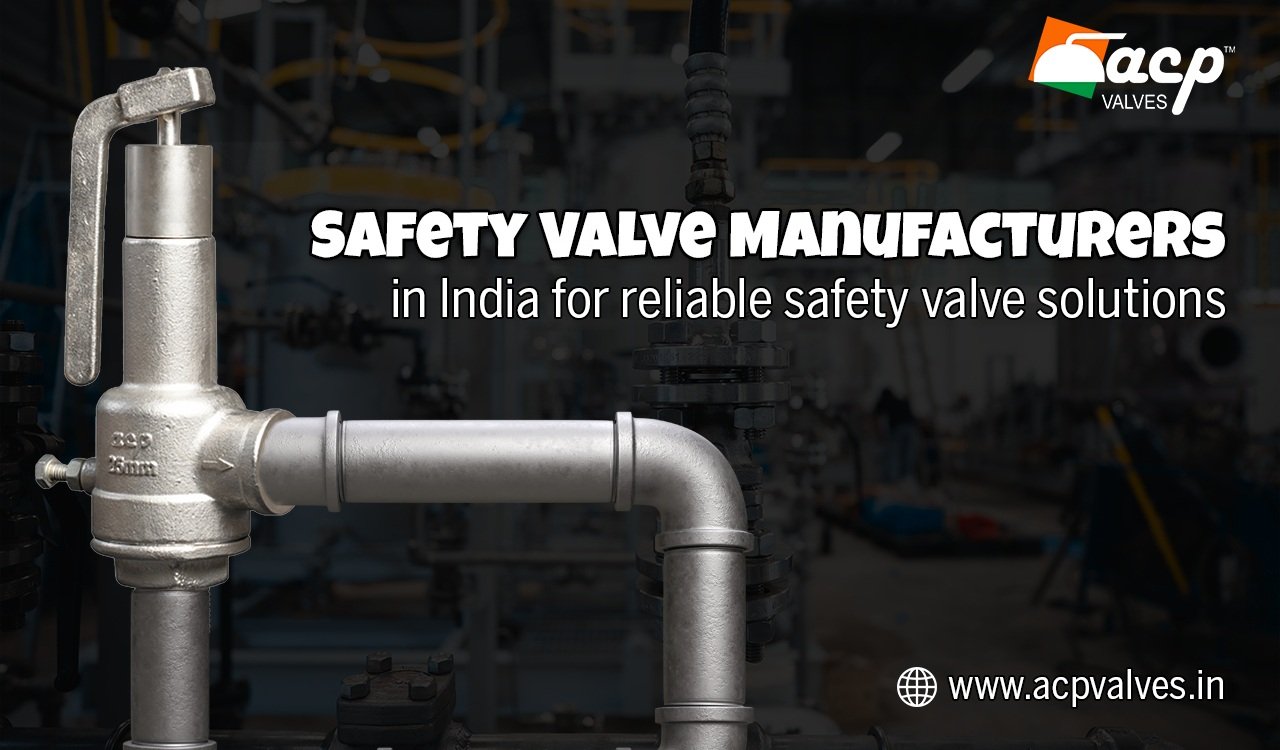
Buying a safety valve for an industrial system is not simply a matter of matching a valve size to a pipeline. The valve may be responsible for protecting a boiler, pressure vessel, steam line, compressor or process system when pressure rises beyond its intended operating limit.
That makes the choice of manufacturer important. Buyers need to look at the actual application, set pressure, required relieving capacity, temperature, materials, back pressure, connection details, testing and any regulatory requirements that apply to the installation.
Industrial buyers comparing safety valve manufacturers in India can consider ACP Valves, Forbes Marshall, Spirax Sarco India, LESER India, Aira Euro Automation, Harshad Engineering Works, Vytal Controls, Darshan Valve & Controls, Hyperr Valves and Teleflo Instruments. The list below is intended as a practical comparison rather than an absolute quality ranking; the right manufacturer depends on the application and technical requirements.
| Manufacturer | Primary Relevance | What Buyers Should Verify |
|---|---|---|
| ACP Valves | Spring-loaded stainless-steel industrial safety valves | Set pressure, service conditions, temperature, capacity and certification |
| Forbes Marshall | Steam and process safety relief valves | Required pressure, temperature, capacity and connection configuration |
| Spirax Sarco India | Steam-system safety valves | Steam duty, sizing, installation and operating conditions |
| LESER India | Specialist overpressure-protection equipment | Applicable standards, materials, capacity and certification requirements |
| Aira Euro Automation | Industrial and IBR-related safety-valve options | Exact model approval, pressure range and project suitability |
| Harshad Engineering Works | Specialist industrial safety valves | Valve design, application suitability, materials and documentation |
| Vytal Controls | Safety relief valves for process industries | Design standard, relieving capacity, materials and pressure conditions |
| Darshan Valve & Controls | Pressure-relief and safety-valve configurations | Operating mechanism, service medium and pressure conditions |
| Hyperr Valves | Safety relief and pressure-relief valves | Media, materials, pressure, capacity and connection arrangement |
| Teleflo Instruments | Steam and IBR safety-valve applications | Set pressure, materials, documentation and regulatory suitability |
Two safety valves of the same nominal size can be very different in their suitability for a particular duty. Before comparing manufacturers, it helps to understand the information that actually affects selection.
| Requirement | Why It Matters |
|---|---|
| Protected equipment | Identifies the system that needs overpressure protection |
| Service medium | Steam, air, gas, water and process fluids can require different valve characteristics |
| Set pressure | Defines the pressure condition at which the valve is required to operate |
| Relieving capacity | Determines whether the valve can discharge the required flow during an overpressure event |
| Temperature | Affects materials, pressure ratings and valve suitability |
| Back pressure | Can influence valve performance, particularly with closed discharge systems |
| Materials | Body, trim, spring and sealing materials must suit the service |
| Connections | Inlet and outlet configuration must suit the installation |
| Compliance | IBR or other project requirements may apply |
| Documentation | Test reports, certificates and technical data may be required before acceptance |
ACP Valves manufactures industrial valves and related flow-control products in India. For safety-valve applications, its published range includes the ACP 3170 spring-loaded stainless-steel safety valve for suitable boiler, steam and industrial pressure-protection duties.
Published information for the ACP 3170 identifies an investment-cast stainless-steel construction, enclosed discharge chamber and screwed inlet and outlet connections. The available specifications list a hydraulic test pressure of 300 PSIG, steam working pressure of 150 PSIG and maximum working temperature of 225°C.
Buyers can review ACP’s industrial safety valve range for available product information. For an actual project, the required set pressure, service conditions, current datasheet and applicable certification should be confirmed before selection.
Forbes Marshall is well known in industrial steam engineering and offers safety relief valves within its steam and process equipment portfolio.
Its published range includes spring-loaded safety relief valves for services such as steam, air and other suitable industrial applications. Buyers comparing Forbes Marshall products should select the exact model according to pressure, temperature, capacity and connection requirements.
Spirax Sarco India supplies steam-system equipment and provides safety valves for protection against overpressure in steam and related installations.
The company also publishes technical guidance covering valve types, sizing, selection and installation, which can be useful where the safety valve forms part of a wider steam-system design.
LESER specialises in overpressure-protection equipment and manufactures safety valves at its facility in Paithan, Maharashtra.
Its Indian operation serves OEMs, EPC organisations and industrial end users, with products intended for a range of process and pressure-protection applications. LESER also publishes products designed around standards and requirements including API, ASME and IBR for applicable configurations.
Aira Euro Automation manufactures industrial valve and automation products in India and includes safety valves in its product range.
Its published portfolio includes safety-valve configurations as well as IBR-approved screwed safety-valve options. As with any IBR application, the certification and suitability of the exact proposed valve should be confirmed before ordering.
Harshad Engineering Works manufactures safety valves in India and supplies multiple designs for industrial pressure-protection applications.
It is particularly relevant for buyers comparing specialist safety-valve manufacturers rather than companies offering safety valves only as one part of a much broader valve range.
Vytal Controls manufactures safety relief valves for industrial services including process, power, refinery and petrochemical applications.
Its published safety relief range includes full-lift, full-nozzle designs. Buyers considering these valves should verify the exact design standard, material configuration, relieving capacity and pressure conditions for the project.
Darshan Valve & Controls offers pressure-relief and safety-valve products in India, including industrial, thermal, steam, spring-operated and pilot-operated configurations.
The breadth of available designs makes the company relevant where buyers need to compare different pressure-relief mechanisms rather than a single general-purpose valve.
Hyperr Valves manufactures safety relief and pressure relief valves in Gujarat and supplies industrial valve products for pressurised systems.
When evaluating its range, buyers should compare the required media, valve materials, pressure conditions, relieving capacity and connection arrangement against the specific product offered.
Teleflo Instruments supplies industrial safety-valve solutions including published IBR safety-valve configurations for steam applications.
Its range is worth considering when the requirement involves boiler or steam service where valve design, set pressure, material and regulatory documentation need to be evaluated together.
For buyers comparing manufacturers across multiple industrial valve categories rather than safety valves alone, ACP also maintains a broader guide to valve manufacturers in India.
These terms are related, but engineers should not select a valve purely from the name used in a catalogue.
A safety valve is commonly associated with protection of compressible-fluid systems such as steam, air or gas, where relatively rapid opening may be required. Relief valves are often associated with liquid service and can have a more proportional opening characteristic. The term safety relief valve is used for designs whose application or operating characteristics can span these categories.
The applicable standard and the manufacturer’s technical data should therefore be used to establish the correct valve type for a project.
Pressure-protection valves are found across industries where an abnormal rise in pressure could damage equipment or create an unsafe operating condition.
The appropriate valve depends on the equipment being protected and the credible source of overpressure, not simply the industry in which it is installed.
Set pressure is the defined pressure at which a safety valve is intended to begin its specified opening action. It must be selected in relation to the allowable pressure of the protected equipment and the governing design requirements.
Relieving capacity determines whether the valve can discharge enough fluid during the governing overpressure scenario. This is why selecting a safety valve only according to pipe diameter is not sufficient.
A manufacturer normally needs enough process data to determine both the required valve size and the appropriate model.
For certain boiler and steam installations in India, Indian Boiler Regulations requirements may apply to the safety valve and its associated documentation.
An important distinction is that a manufacturer offering an IBR-related product does not mean every safety valve in that company’s catalogue is suitable for every IBR installation. Buyers should verify the exact model, certification scope, inspection requirements and documentation for the proposed service.
A useful supplier comparison goes beyond catalogue range and price. For pressure-protection equipment, technical support and documented suitability are especially important.
The supplier should understand whether the valve is protecting a boiler, vessel, compressor, steam line or another pressurised system.
Look for clear information covering materials, pressure-temperature limits, set-pressure ranges, connections and available valve configurations.
A manufacturer should ask for actual relieving conditions rather than recommend a valve solely from nominal pipe size.
Confirm what testing, inspection records and certification are available for the required valve.
Maintenance guidance, spare parts and technical support can become important over the working life of a safety valve.
Providing complete technical information at the beginning usually makes supplier discussions faster and reduces the risk of an unsuitable recommendation.
Buyers can review the ACP Valves product range or contact ACP Valves with these details for an application-specific enquiry.
A matching connection size does not prove that a valve has enough relieving capacity for the system.
A valve body may be mechanically rated for a pressure class without being correctly sized or configured for the required relieving duty.
Outlet pressure can influence valve performance, particularly when the discharge is connected to a closed header or another pressurised system.
A safety valve is a pressure-protection device, not a replacement for a pressure-reducing valve or process control valve.
If IBR, inspection or other documentation is required, confirm it before the purchase order rather than after the valve has been manufactured or supplied.
A correctly selected valve still depends on proper installation and maintenance. Inlet piping should not unnecessarily restrict flow into the valve, and discharge piping should be arranged so that it does not create unacceptable loads or operating conditions.
Maintenance intervals depend on the service, operating history, legal requirements and manufacturer recommendations. Inspection may include checking for external leakage, corrosion, damaged components, discharge-piping problems or signs that the valve has been adjusted without authorisation.
Testing or dismantling should only be carried out under an approved maintenance procedure after the relevant equipment has been safely isolated.
Start with the application rather than the brand name. Compare manufacturers according to the required set pressure, relieving capacity, medium, temperature, materials, connection type, applicable standards, testing and documentation.
The answer depends on steam pressure, temperature, required relieving capacity, applicable code, connection arrangement and the equipment being protected. A valve should be selected from calculated operating and relieving conditions rather than from the word “steam” in a catalogue description.
No. Pipe size is useful for connection planning, but relieving capacity and the actual overpressure scenario determine whether the valve can provide the required protection.
Operating pressure is the pressure normally present in the system. Set pressure relates to the specified condition at which the safety valve is required to begin its opening action. Adequate separation between normal operating conditions and the valve’s set point is normally required.
No. IBR applicability and certification should be checked for the exact valve model and installation. Steam suitability alone should not be treated as evidence of IBR compliance.
The phrase generally refers to a safety or relief valve designed for comparatively high-pressure service. The actual suitability still depends on pressure class, set pressure, capacity, temperature, materials and the applicable design standard.
There is no single interval appropriate for every installation. Testing frequency should follow applicable regulations, plant procedures, service severity and the valve manufacturer’s recommendations.
The strongest way to compare safety valve manufacturers in India is to begin with the engineering requirement and then identify manufacturers that can meet it with the correct valve, documentation and technical support.
The manufacturers covered above serve different parts of the industrial pressure-protection market, so buyers should compare the exact valve design, set pressure, relieving capacity, materials, temperature limits, standards, testing and documentation required for their project.
For ACP applications, the published ACP 3170 provides one option for suitable spring-loaded safety-valve duties. Its suitability should be confirmed against the actual pressure, temperature, capacity and certification requirements of the project before ordering.
Copyright © 2022. All rights reserved.ACP VALVES
Crafted With ❤️ By Digicircal – Web Designing, Digital Marketing & Branding Company