Urgent Call?
+91-7453000063
Email Us
sales@acpvalves.in
+91-7453000063
sales@acpvalves.in
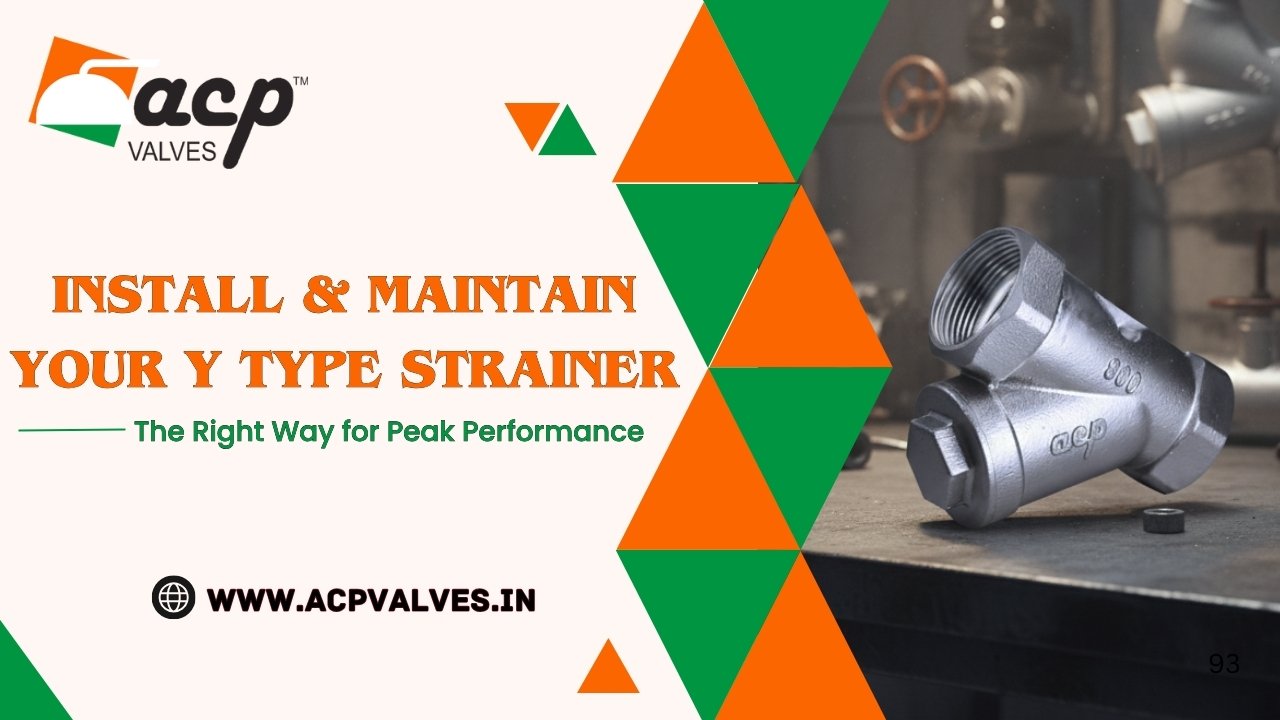
Y type strainer is one of the most reliable and cost-effective used in piping systems to protect critical equipment from debris and contamination. These strainers are generally used in various industrial applications such as power plants, water treatment facilities, HVAC systems, steam lines, and oil & gas networks. These strainers play an important role in ensuring smooth operation and long term efficiency. Well, many new professionals in the field often ask What is the use of a y type strainer?. Like we mentioned earlier the answer is very simple it is used to filter out dirt, rust, welding slag, scale, or any unwanted solid particles from the fluids before they reach pumps, valves or any other sensitive instruments. So in this guide you’ll get complete information about this particular product. We’ll learn about y type strainer flow direction, installation techniques, cleaning methods, troubleshooting, leading Y type strainer manufacturers in India and the best practices for its maintenance.
In order to ensure the best performance of your Y type strainer, its right installation is very important. A wrong orientation or a reversed flow direction can damage the screen. Furthermore, wrong installation can also lead to pressure drop and debris passing through the strainer.
When you get a Y type filter you’ll see a raised arrow cast or stamp on its body. This clearly indicates the direction of the fluid flow from the inlet to the outlet. While installing you must ensure that the screen of the strainer is installed on the downstream side of the flow path. This way you can ensure that the debris is trapped effectively before reaching the critical downstream components such as pumps, control valves, or stainless steel valves. If you install them in reverse it can lead to screen collapse or system failure.
For horizontal pipeline, you must ensure that the pocket or leg of the Y must point downward at the 6 o’clock position. This is the best orientation that allows gravity or collect debris in the pocket and keeps the main flow path clear. If you install it sideways or facing upwards then the debris can flow back into the system or clog the pipeline. This can lead to reduced efficiency and damaged equipment.
If you are installing the strainer in vertical liquid lines, then the flow must always be downward, so the strainer pocket must also point downward. This way gravity will naturally pull debris into the strainer pocket and will prevent it from returning to the pipeline when the flow slows down or stops. It’s crucial to avoid installing Y strainers in vertical lines with upward flow, in such cases, debris will fall back into the system, causing clogging or bypass.
When we talk about steam and gas systems they have unique installation requirements compared to the liquid pipeline systems. Incorrect orientation in these lines can lead to condensate pooling, water hammer, and serious operational risks.
For steam or gas systems y type strainer manufacturers recommend horizontal installation. In horizontal systems the pocket of the strainer should never point directly downwards, as because of this condensate will accumulate in the pocket. This build-up increases pressure drop and can lead to costly system damage over time. Correct installation ensures smooth condensate drainage and effective debris filtration.
In order to minimise or eliminate damage from water hammer and condensate you should install it in a way that the strainer pocket is angled at 10 o’clock or 2 o’clock. This position allows for the condensate to drain out naturally without pooling. Water hammer is one of the most common problems in the Indian industrial steam systems, especially in textile mills and power plants. It happens when a slug of water is suddenly forced through the pipeline. This leads to the damage of stainless steel pipe fittings, valves, and equipment.
Regular cleaning is very important for maintaining the flow of fluid and for the protection of equipment. The good news is that cleaning a Y strainer is straightforward if done carefully.
Make sure that you close the upstream and downstream isolation valves, this would facilitate a safe cleaning environment. You can use the shut-off valves for this purpose, provided by your ball valve manufacturer. Next you should use the system’s vent valve or the blowdown connection to release all internal pressure. Make sure that you give ample time to the system to cool down, before opening especially in steam or hot water lines
Once you have depressurized unbolt or unscrew the strainer cover carefully and remove the screen. Next, you should clean the screen with a soft brush or a low-pressure compressed air to remove coarse debris. For many fiber particles or any oily residues, you’ll need to soak the screen in an appropriate cleaning solution. Since most strainers are made with stainless steel valves or mesh screens (SS 304 or SS 316), mild solutions are usually sufficient.
Once you have cleaned the screen, make sure to check it for any punctures, tears, or distortion. As any damage in the screen means that the dust will pass through it, which would lead to damages downstream. If any issues are found make sure to replace it. Also, check the gasket between the cover and the body. If it’s flattened, cracked, or worn out, replace it before reassembly to ensure a leak-proof seal.
In order to ensure long term performance there is a need for a structured maintenance schedule. With regular maintenance you can stop any mishaps before they happen.
One of the best indicators of when to clean is the differential pressure (DP) between the upstream and downstream side of the strainer. After the installation, record the clean DP reading. When the pressure drop increases by 5 to 6 psi above this baseline, it’s time to clean the strainer. Exceeding 10 psi can cause significant operational problems.
In the initial weeks of the installation, monitor the strainer frequently, in order to understand how fast it collects debris. Based on this information, you can set up a preventive maintenance schedule. Industries such as HVAC or process water systems that use Y type strainer may need monthly or bi-monthly cleaning. For cleaner systems, twice-yearly cleaning may suffice. If your stainer is equipped with a blowdown valve, then a quick flush can easily remove debris without stopping the main flow and extending the intervals between the full cleanings.
Even with correct installation, sometimes you may face some issues over a period of time. Identifying these problems early can help you in preventing expensive equipment failures.
Cause: Clogged screens due to irregular cleaning, sudden debris surges, or an undersized strainer.
Solution: Once identified, clean the screen immediately and verify that the mesh size you are using suits the application. If clogging still continues then upgrade to a large strainer model.
Cause: Damaged or improperly seated gasket, or uneven bolt tightening.
Solution: To solve this isolate and depressurize the system. Then make sure to replace the gasket with a new one and tighten the bolts uniformly in a crisscross pattern.
Cause: Torn screen, incorrect flow direction installation, or mesh size too coarse.
Solution: Check and replace the screen. Recheck the y type strainer flow direction to make sure that it is installed properly. If debris still bypasses then switch to a finer mesh to protect sensitive equipment like pumps, and flow meters.
Even though the Y type strainer is a small component in the piping system, its role is very important. With proper installation, regular cleaning, and scheduled maintenance you can increase the safety and lifespan of your system. Neglecting strainer maintenance can lead to clogged pumps, damaged valves, water hammer, and expensive downtime. Regular maintenance is a small investment compared to the huge savings on equipment repair, replacement, and productivity loss. ACP Valves is the leading manufacturer of everything pipeline related. You can get everything from stainless steel pipe fittings to stainless steel valves for your pipeline. Being the leading ball valve suppliers, we provide the highest quality to our clients.

Copyright © 2022. All rights reserved.ACP VALVES